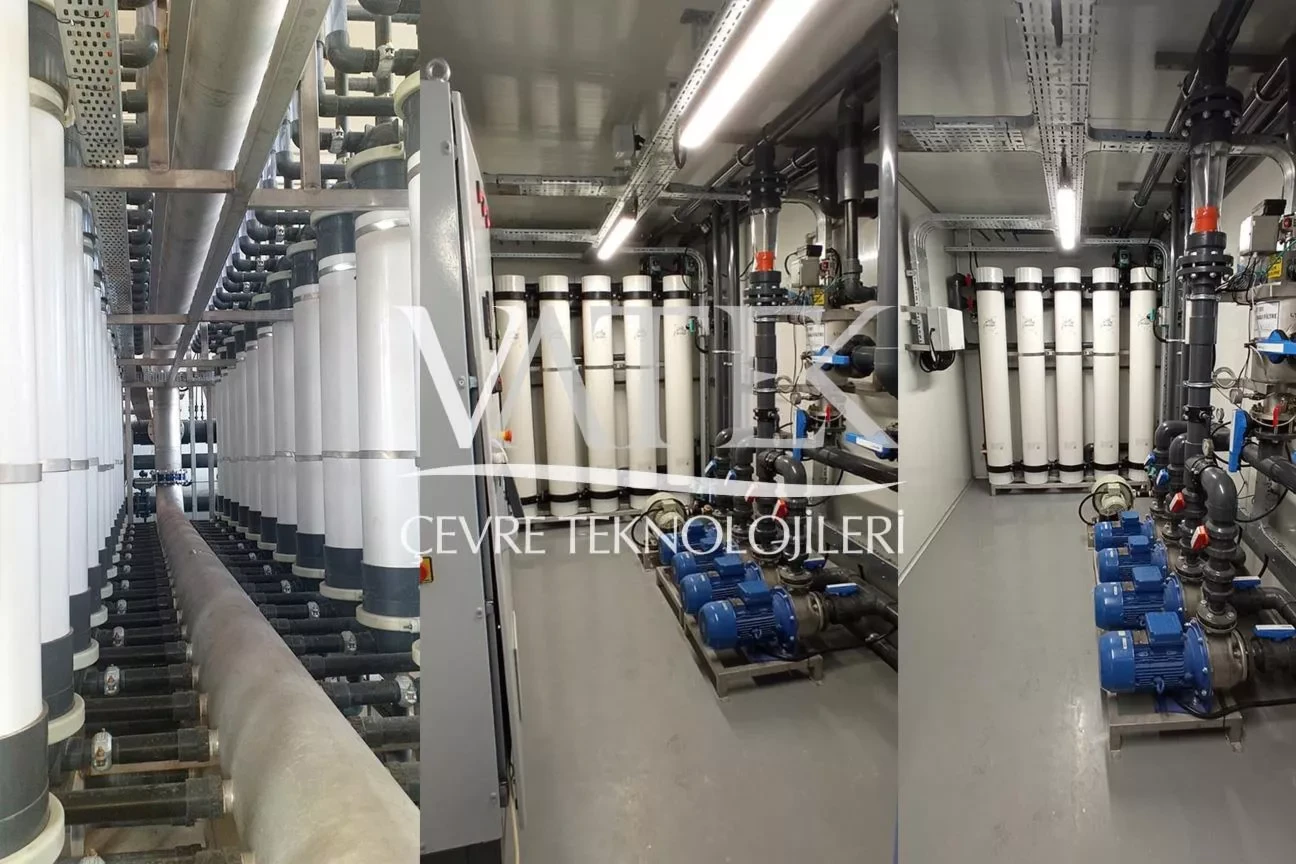
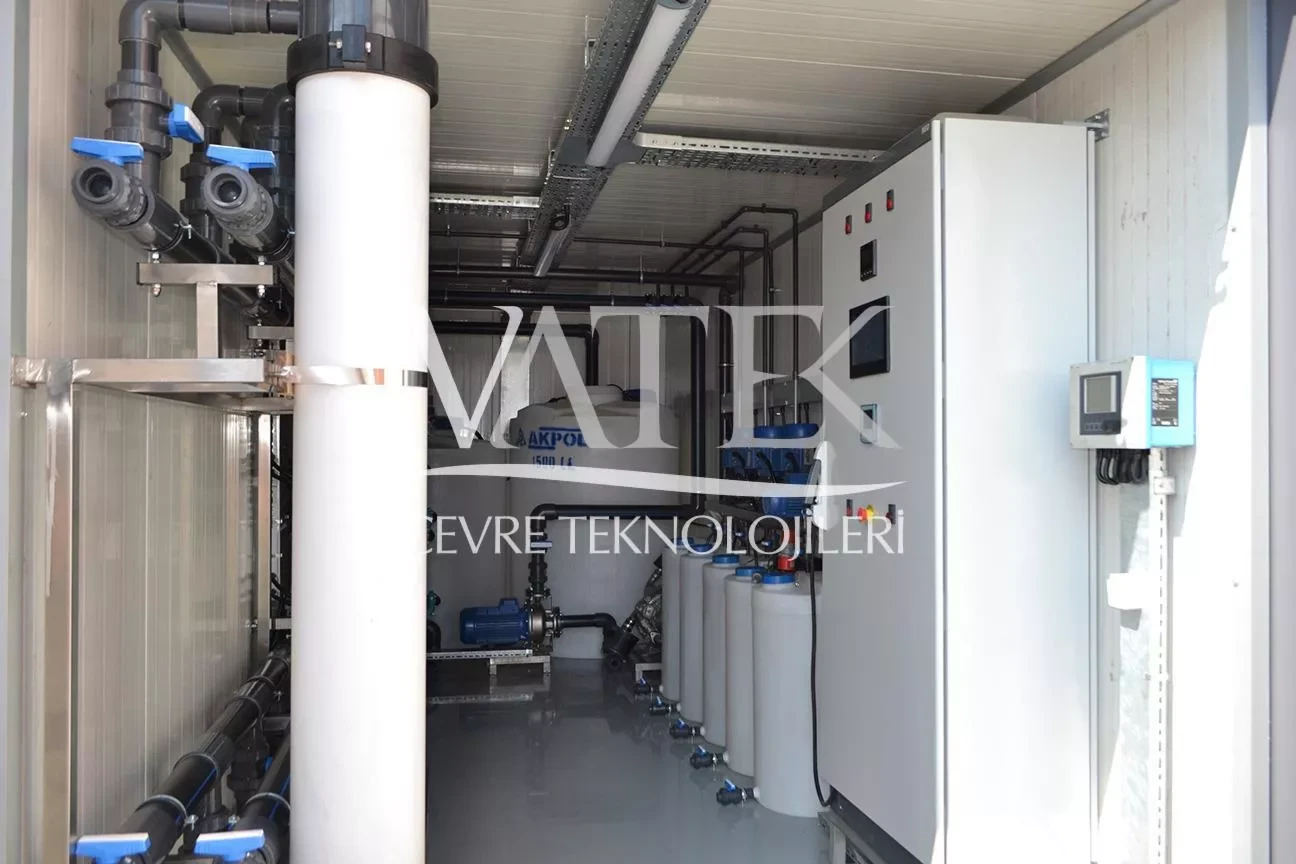
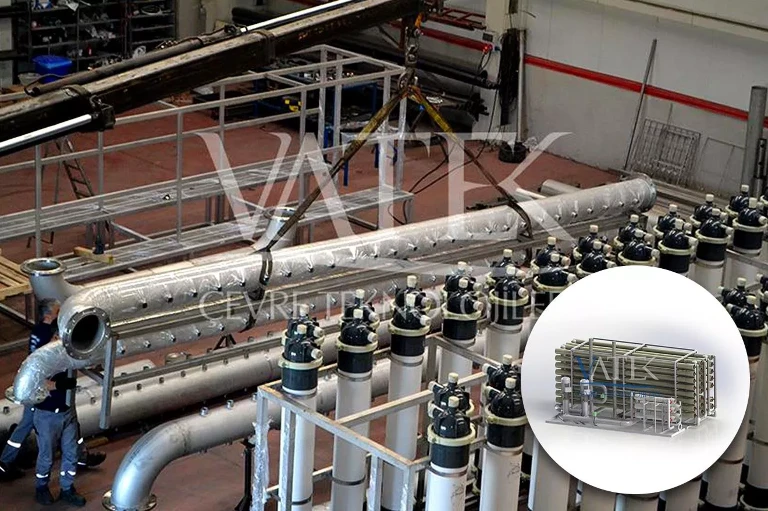
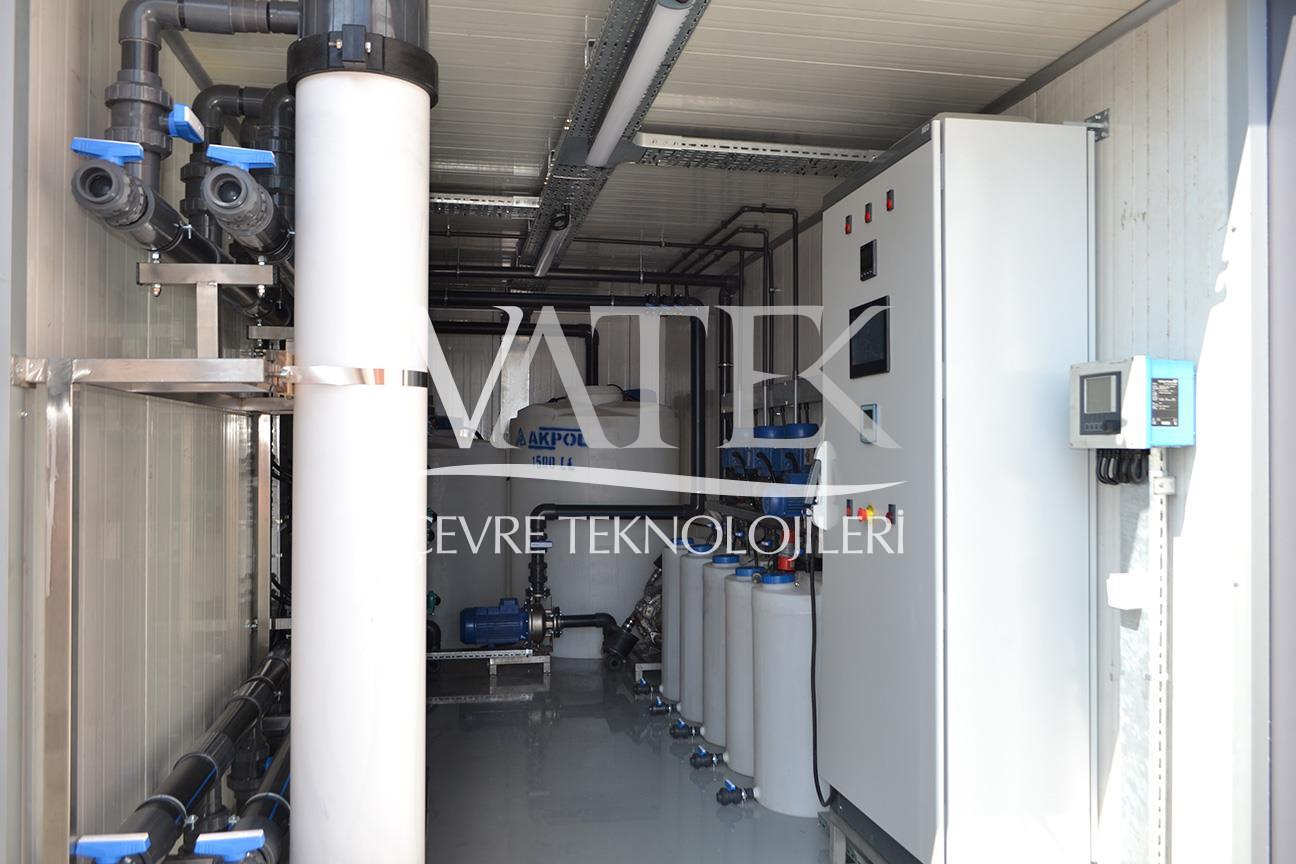
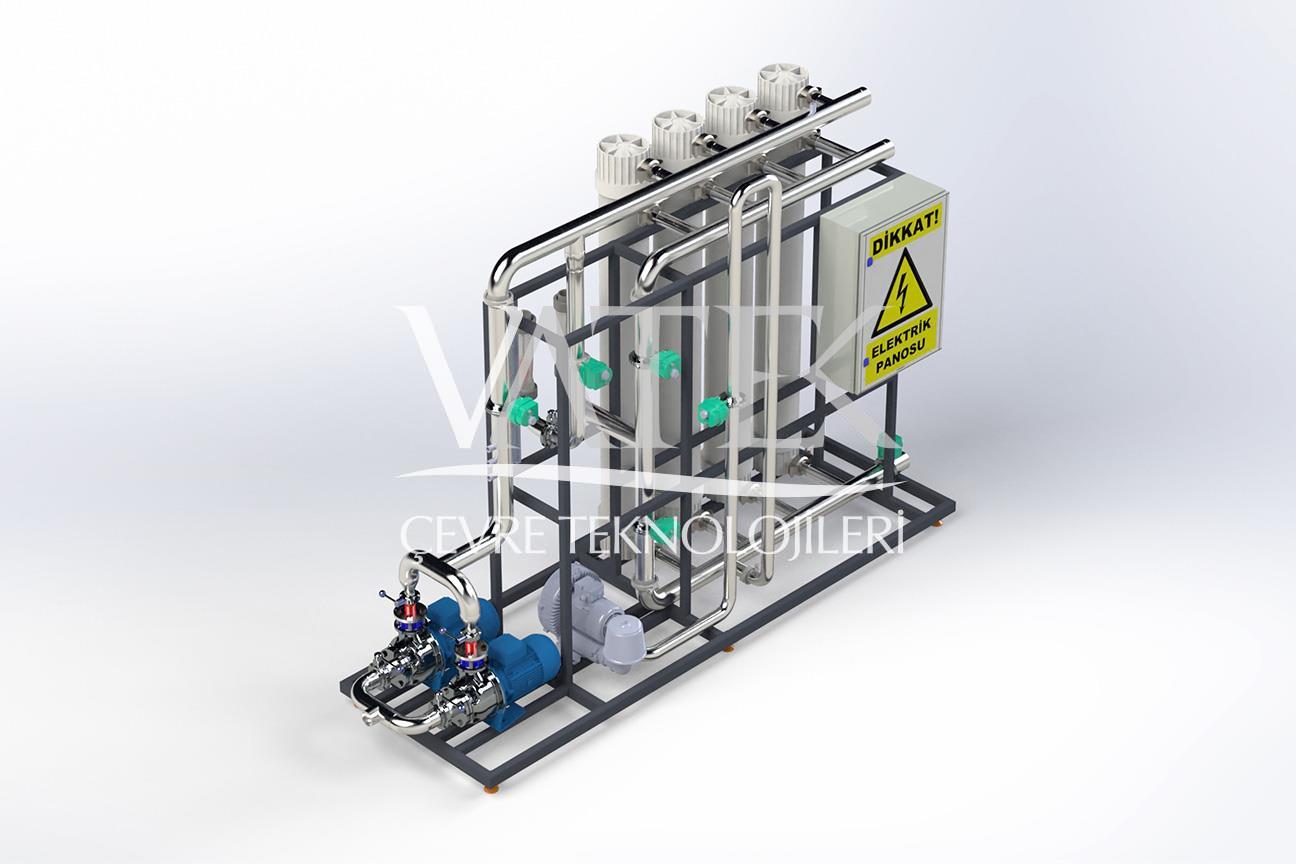
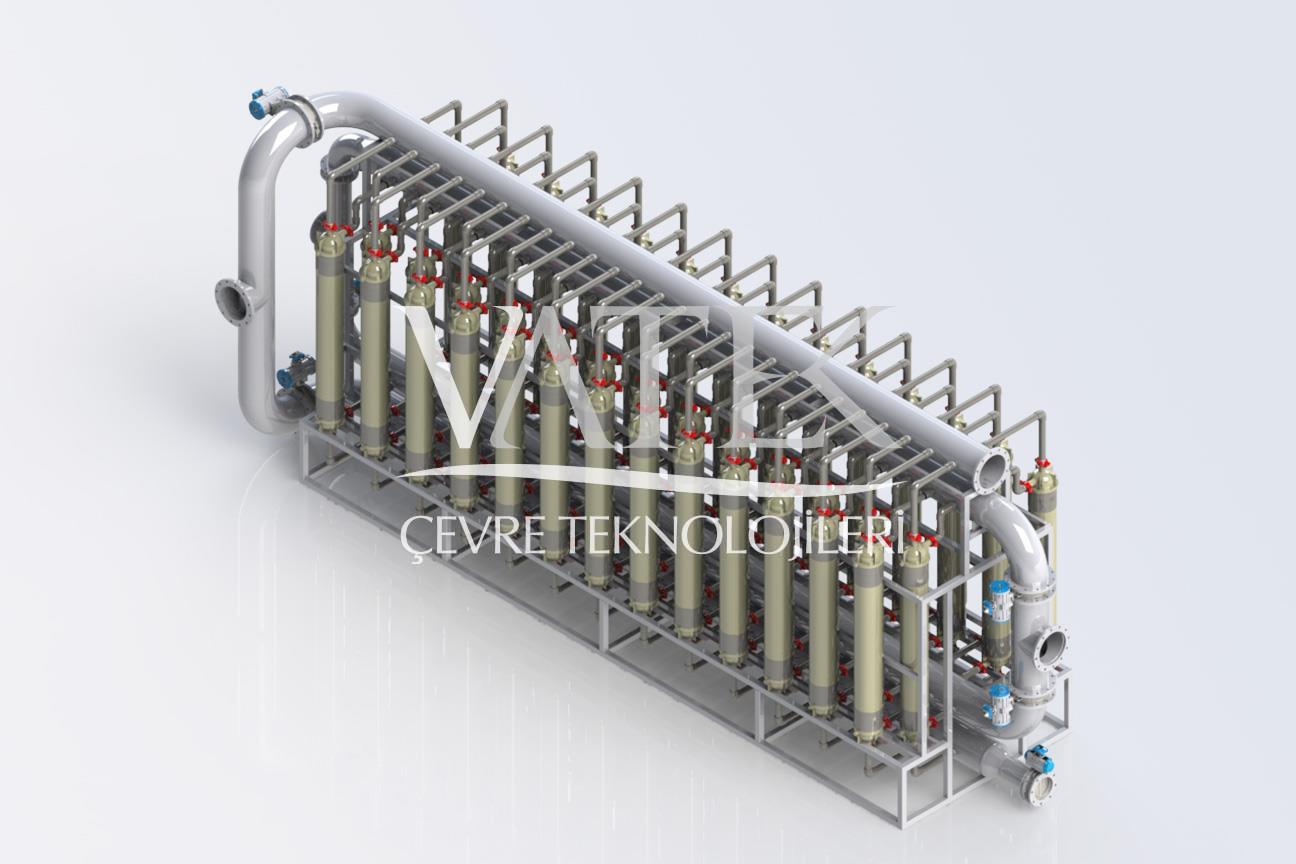
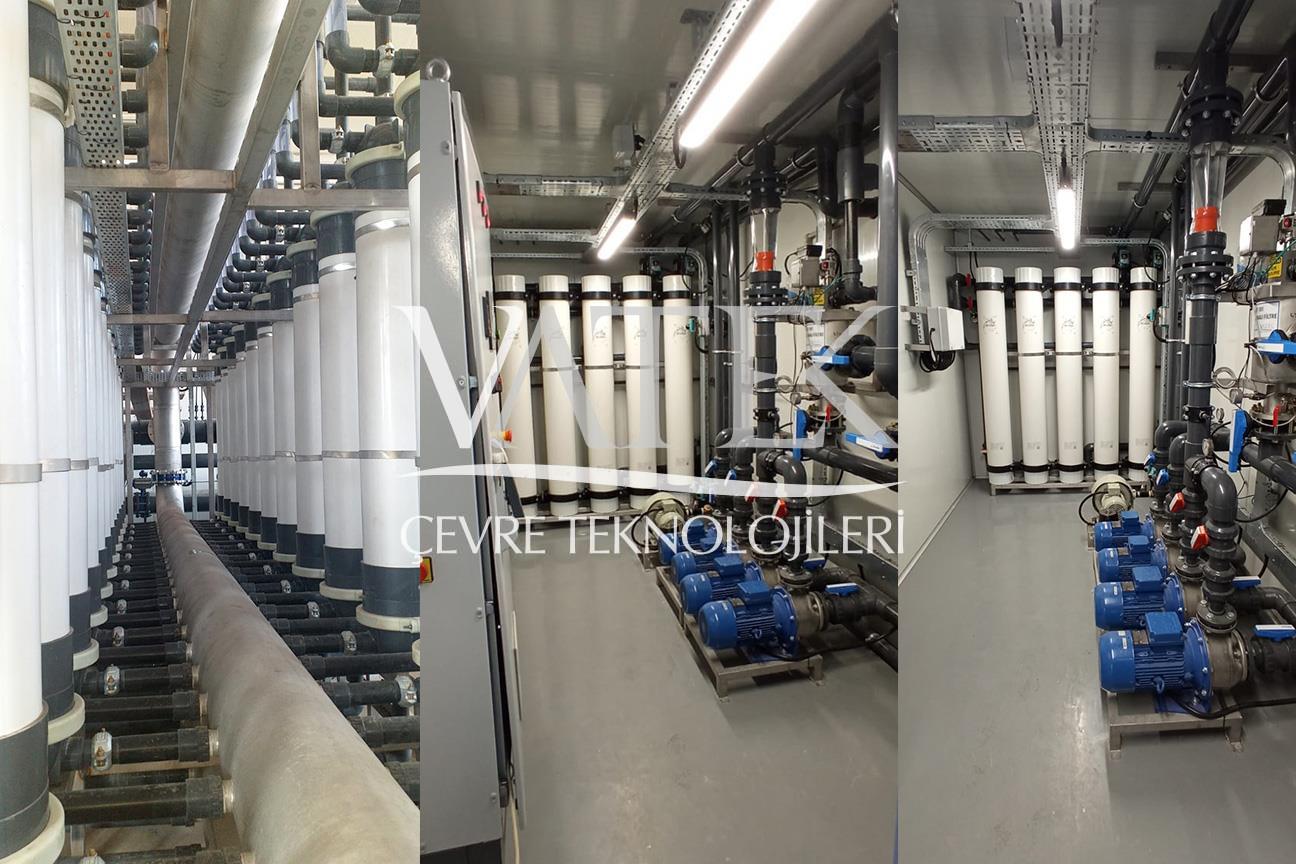
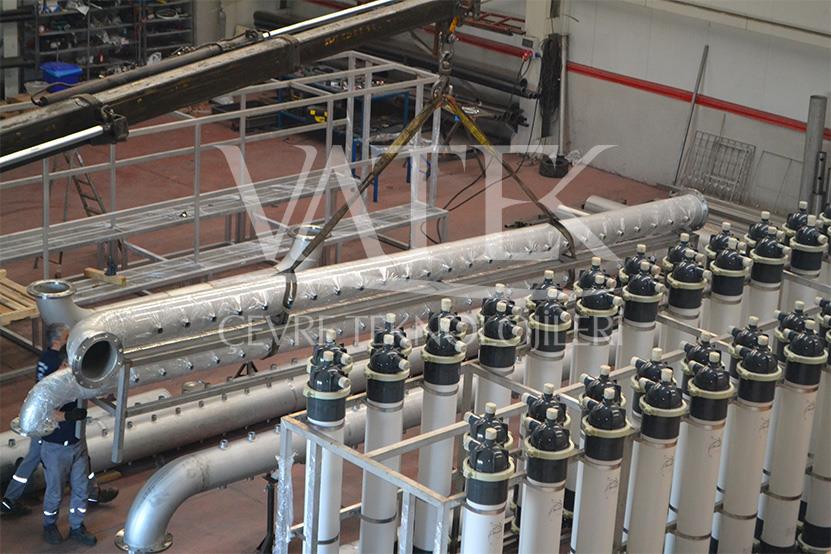
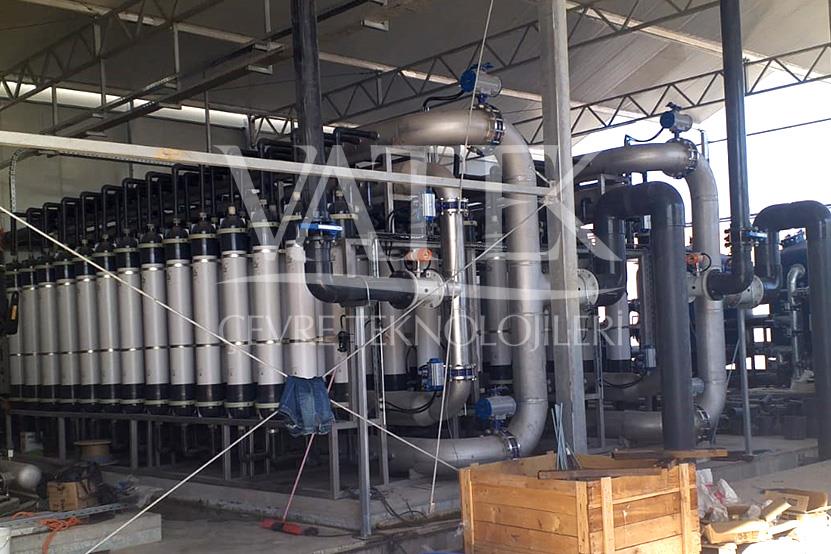
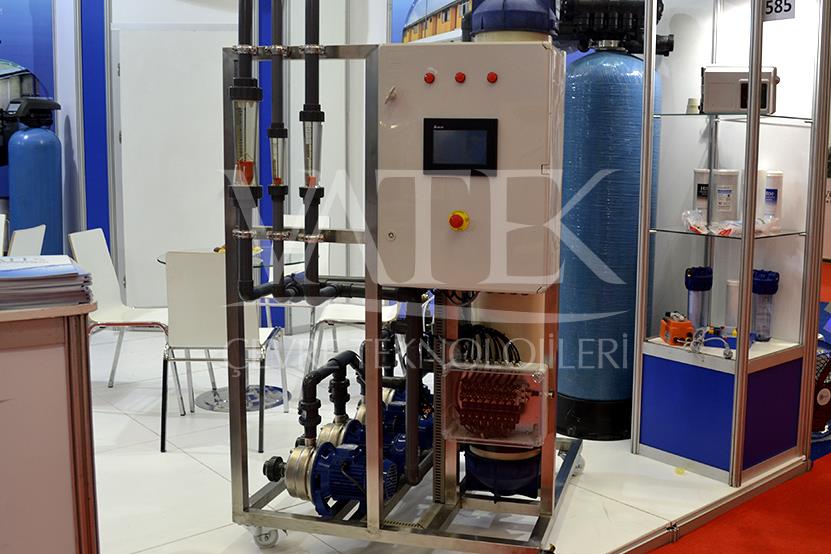
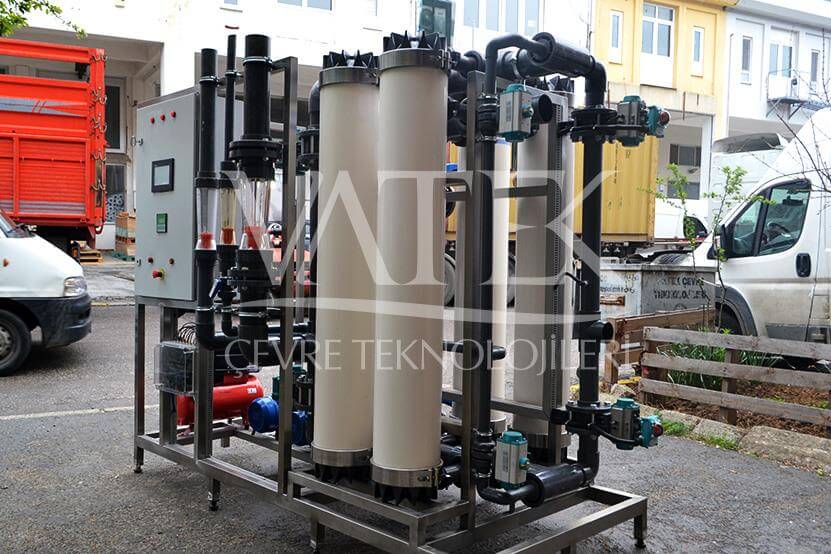
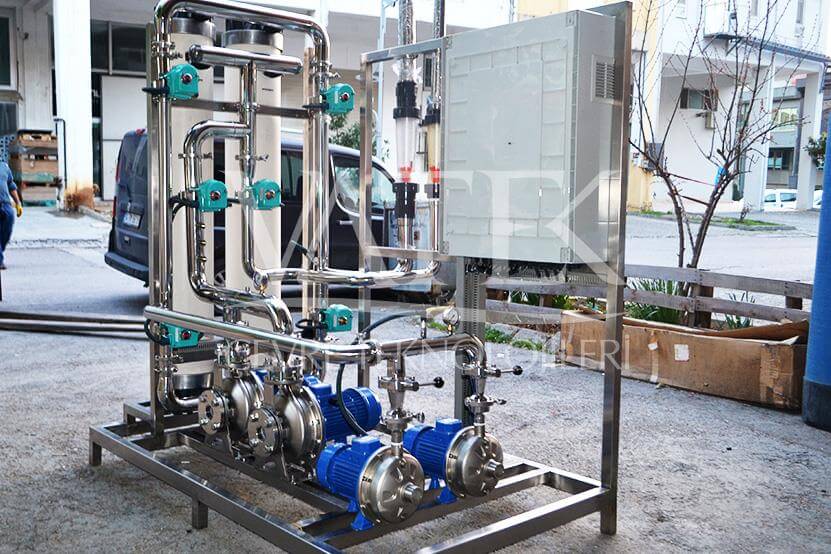
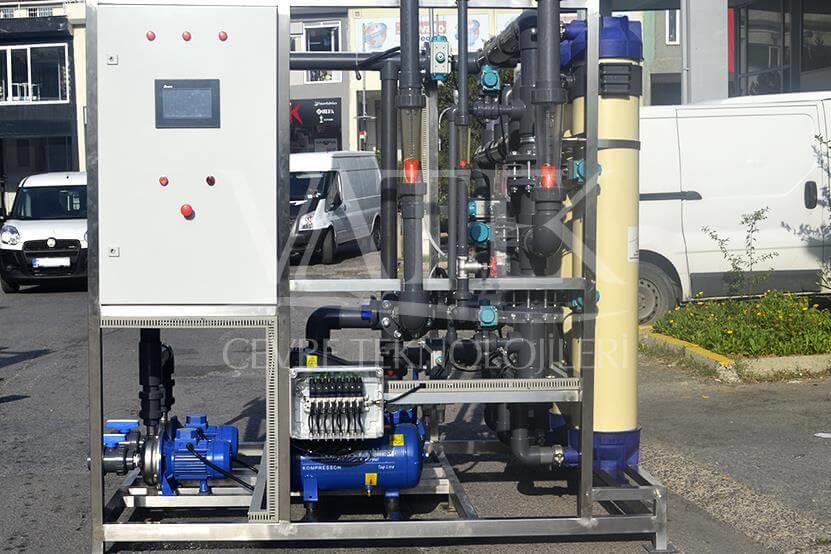
In addition to being one of the most preferred solutions for drinking water supply, ultrafiltration systems have also proven effective in wastewater disposal and seawater treatment plants.
In short: Ultrafiltration is a separation process that operates through a porous membrane. Ultrafiltration systems use membranes with a filtration precision of approximately 0.02 microns. These treatment technologies effectively retain colloidal contaminants, suspended solids, and many bacteria in water, while also helping to remove a significant proportion of viruses.
The physical quality of the water is significantly improved, providing a much more stable and controllable water supply for subsequent treatment stages, such as reverse osmosis and disinfection.
0.02 Microns
Filtration Precision
As Vatek, from the perspective of a company that manufactures ultrafiltration systems and carries out installations in Türkiye and abroad, we often position ultrafiltration as the “safety mechanism of the system” during the project design stage. This enables more predictable operation for both process water and drinking water applications.
For More Technical Information +90(216) 526 0426
- Why Is It Reliable?
A Reliable Intermediate Stage for Drinking Water and Process Water
Ultrafiltration systems are not only technical equipment but also one of the safety barriers in the treatment process. In a properly designed line:
- They provide a highly reliable pretreatment or intermediate treatment stage in drinking water production.
- They play a critical role in reducing organic loads and suspended solids in wastewater recovery projects.
- Before seawater reverse osmosis systems, they reduce the load on RO membranes, improving their performance and helping to extend membrane service life.
Fully Automatic
PLC-controlled operating structure.
- Why Should It Be Preferred?
What Are the Advantages of Ultrafiltration Systems?
We frequently observe the following in the field: the greatest advantage of an ultrafiltration system is that it requires less energy than other treatment units and reduces operating costs.
1
Low Energy Requirement
Pressure levels are considerably lower than in high pressure systems such as reverse osmosis. This significantly reduces energy costs, particularly in long-term operations.
2
Low Chemical Consumption
When suitable pretreatment and periodic chemical cleaning (CIP) procedures are applied, ultrafiltration systems maintain chemical consumption at reasonable levels. This offers advantages in terms of both operating costs and environmental impact.
3
High Treatment Efficiency
In a properly designed ultrafiltration line, treatment efficiency can exceed 95%. Of course, this rate may vary from one project to another depending on the characteristics of the raw water, the pretreatment design, and operating discipline.
4
Compact Design and Minimal Space Requirement
Thanks to their modular membrane structure, these systems can be installed in relatively small areas, even at high flow rates. This compact structure provides a significant advantage, particularly in upgrade projects added to existing facilities.
- Operation and Maintenance
Fully Automatic, PLC-Controlled Structure:
Modern ultrafiltration units monitor processes such as backwashing, chemical cleaning, and alarm management through automation. Operator intervention is minimized, making the system more traceable and secure.
User-Friendly Operation
Thanks to simple interfaces, alarm monitoring screens, and recorded operating data, operators can quickly learn and manage the system. At Vatek Water Treatment Systems, we frequently observe that operators can comfortably take over the lines after just a few days of training.
- What Technical Features Does It Offer?
Key Features of Ultrafiltration Systems
- They provide a reliable and stable treatment stage in drinking water production.
- With proper design and operation, treatment efficiency can exceed 95%.
- They have a fully automatic, PLC-controlled operating structure.
- They are easy to operate and reduce operator dependency.
- Thanks to their compact design, the need for additional large spaces is minimized.
- Their low energy requirement and limited chemical consumption help reduce operating costs.
- Suitable for Use in Different Industries
Ultrafiltration System Application Areas
Ultrafiltration technology is used according to a similar principle across many different industries, but with different process configurations. The main application areas are listed below:
- Natural spring water bottling facilities
- Beverage industry (fruit juice and carbonated beverage production, etc.)
- Food industry
- Pharmaceutical industry
- Electronics industry (high-purity process water applications)
- Chemical industry
- Agricultural and livestock facilities
- Aviation and maritime applications
- Automotive industry (wash water and process water preparation)
- Energy industry (pretreatment of boiler feed water, etc.)
- Hotels and resorts (improving the quality of drinking and utility water)
- Construction industry (centralized water treatment solutions for residential and commercial buildings)
- Textile industry (rinse water and process water recovery)Defense and military facilities
- Hospitals and healthcare institutions
The common point among these industries is that water quality is critically important for both production efficiency and human health. Ultrafiltration provides a “controlled and repeatable” level of quality in these applications.
- Contact Us for Project Design
Engineering Approach with Vatek Water Treatment Systems
Applying the same template to every facility is not a realistic approach in the water treatment industry. Many variables, including raw water characteristics, process requirements, available installation space, budget, and the profile of the operating team, must be evaluated together when designing the system.
At Vatek Environmental Systems, our approach to ultrafiltration projects includes:
- Considering raw water analyses,
- Ensuring compatibility with pretreatment stages such as filtration, coagulation, and flocculation,
- Integrating the system with subsequent processes such as RO, disinfection, and storage,
- Providing operator training after commissioning
We adopt a comprehensive engineering approach. As a result, the installed ultrafiltration line becomes a process stage capable of operating consistently not only on the first day but also for many years.
For More Technical Information +90(216) 526 0426
Frequently Asked Questions
With low energy and chemical consumption, ultrafiltration systems effectively reduce suspended solids and microorganism loads, offering a stable, reliable, and efficient pretreatment or intermediate treatment solution for drinking water, process water, and recovery applications.
CALL NOW
What is the difference between ultrafiltration and reverse osmosis?
Ultrafiltration is primarily effective in retaining suspended solids, colloids, bacteria, and certain large molecules. Its membrane pore size is below the micron level. Reverse osmosis, on the other hand, operates at higher pressure and can also separate dissolved salts and much smaller molecules. In practice, ultrafiltration is used as a “preliminary barrier” before reverse osmosis in many projects.
Can ultrafiltration completely replace reverse osmosis (RO)?
No, this depends on the project. While ultrafiltration effectively separates suspended solids suspended solids, bacteria, and viruses, it is insufficient for removing dissolved salts, ions, and very small molecules from water. Therefore, when dissolved salts must also be removed, such as in seawater treatment or highly mineralized well water, ultrafiltration is used as a reliable pretreatment stage for the reverse osmosis system.
Is maintaining an ultrafiltration system difficult, and does it need to stop frequently?
In a properly designed ultrafiltration line with well-planned automation, routine maintenance mainly consists of periodic membrane backwashing and chemical cleaning (CIP) performed at specific intervals. Since these processes are managed through automated PLC scenarios, the maintenance process is generally manageable for operators. However, maintenance frequency may vary if the quality of the raw water deteriorates or operating instructions are not followed.